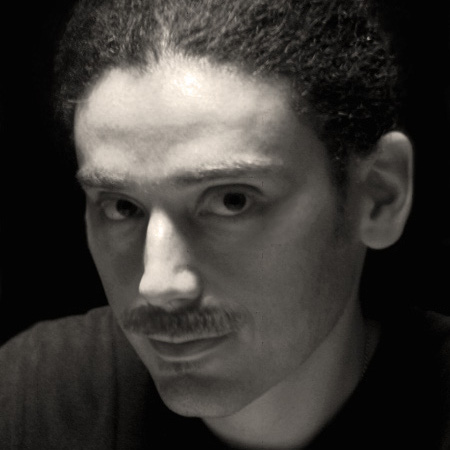
Mathieu CARBONNEAUX OSUAGWU
Complex Systems Architect | Cloud-Native, Infrastructure & Security Expert
About
Overview
Passionate about computing since childhood, I began programming at age 12 (Logo, Basic, Z80 assembly, 680x0, C/C++). My initial training, focused on electronics and industrial computing followed by business IT, provided me with a comprehensive vision of computing, from hardware to software.
With nearly 30 years of professional experience (since 1997), I have held successive roles as a Developer, DBA, Systems/Network/Security Engineer, and Middleware Expert. I am a multipotentialite: my profile naturally extends beyond established frameworks. I consistently manage architecture, operations, implementation, and design in parallel (Architect and DevOps).
Major Technical Achievements
- SFR Proprietary API Gateway (since 2006): 15+ years of continuous evolution (IBM DataPower → Open Source mod_perl → REST → Zeus/vTM Event-Driven Architecture).
- Multi-level Load Balancer: DSR (Direct Server Return) architecture based on eBPF/Cilium with Maglev consistent hashing, driven by a custom in-house Kubernetes operator.
- Security Data Lake: 300 TB of data on ClickHouse/Kafka, centralizing all security logs for the SFR Information System (FW, Proxy, VPN).
- Transformation Pioneer at SFR: Introduction of Linux (2004), virtualization (2006), and then Kubernetes (2020).
- GCP Landing Zone (2023): Complete implementation (Dedicated Interconnect, Keycloak SSO, MLOps platform).
Current Expertise
Currently, I am involved in nearly all infrastructure architecture directions for SFR SI. I am proficient in over 10 languages, particularly the Java/J2EE ecosystem (WebLogic, JBoss, Tomcat). My current research focuses on AI and Machine Learning for implementing intelligent anti-DDoS mechanisms.
Work Experience
Massive scale observability architecture. Collaboration with Zabbix (v2.3) for LLD. Design of a 300 TB security data lake (ClickHouse/Kafka). Evangelizing modern observability practices.
- Implementation of a 300+ TB data lake on ClickHouse/Kafka
- Introduction of Zabbix and contribution to v2.3 development
- Standardization of metrics and logs across the entire Information System
- Full observability stack (metrics, logs, traces)
SOA standardization and Web architecture. Leading the GCP Landing Zone (2023): full management via Terraform (Network Interconnects, VPC, IAM). Implementation of GitOps on a massive internal GitLab instance.
- SOA/API Architect and SI standardization
- Terraform Automation: Network Interconnect, VPC, and IAM on GCP
- Management of one of the largest internal GitLab instances (GitOps, CI/CD)
- Design of high-performance Load Balancers (eBPF/Cilium/Maglev)
- Technology evangelism: from virtualization to Kubernetes
Design and evolution of the API Gateway (15 years). Expertise in Java/J2EE (Strategic Legacy) and application servers (WebLogic, JBoss, Tomcat). Migration to event-driven microservices architectures.
- Initial design of SFR API Gateway (2006)
- Java Application Server expertise (WebLogic, JBoss, WebSphere)
- Migration from IBM DataPower → Open Source (Apache/mod_perl)
- Full support for SOAP and REST
- Event-driven architecture (vTM)
IAM engineering and LDAP directories. Migration from SiteMinder to Keycloak. Implementation of advanced MFA (WebAuthn, OCRA). Application of Agile methodologies (Scrum/Kanban).
- LDAP directory management (Netscape → 389 DS)
- SSO migration: SiteMinder → Proprietary solution → Keycloak
- MFA: TOTP, WebAuthn, FIDO, Passkeys, OCRA
- Project leadership using Agile (Scrum / Kanban)
High-performance architecture. First Apache Linux foundation. Carrier-grade network expertise (BGP, VPN). Kubernetes design (Talos/Cilium) via GitOps and operators.
- Design of the first SFR Apache Linux foundation
- High-availability hosting architecture
- Multi-level Load Balancing (BGP/ECMP/eBPF/Cilium/HAProxy)
- DSR with Maglev consistent hashing
Lead on the introduction of Linux. Industrialization of packaging and deployment automation. Evangelizing the shift of low-level layers toward Open Source.
- Introduction of Linux at SFR (2004)
- Virtualization and container evangelism
- Multi-platform industrialization and packaging
- Deployment automation (Kickstart, NIM, Foreman)
Critical transactional systems (XA, 2PC). L3/L4 support for Tuxedo and Encina. Complex modeling via UML and Merise.
- L3/L4 Support for Tuxedo and TXSeries/Encina
- Distributed transaction expertise (XA, 2PC)
- Merise and UML modeling for transactional systems
- MQSeries Administration & Kafka Migration
Expertise in DCE and TXSeries/Encina across heterogeneous Unix environments. Critical operations of 30 Encina cells.
- L3/L4 Support for DCE and TXSeries/Encina
- Multi-platform operations
- Expertise in MQSeries, Oracle, Informix
Outsourcing of the WAP/WEB portal to ATOS. Windows 2000, COM/DCOM, and MSMQ architecture.
- Outsourcing of Bouygues 6ème sens WAP portal
- Implementation of complete infrastructure
Performance optimization of SIMP. Merise modeling for complex migration to Oracle 8i.
- SIMP performance optimization
- Encina/Informix → TXSeries/Oracle migration
- C/C++ and Unix Shell development
Development of SRPP (Prepaid Top-ups). Object-oriented modeling and Informix ESQL/C development.
- N-tier architecture for top-up system
- C/C++ and ESQL/C development
Design of n-tier architecture for payment methods. Full Merise modeling.
- Full n-tier architecture design
- Merise modeling
- TITAN FT → BBA FT migration
Y2K migration of CSP code on OS/390 Mainframe. DB2 Client/Server architecture.
- Y2K CSP/MVS Migration
- DB2 Client/Server Architecture
- DRDA/SNA Gateways
Distributed document management. Merise modeling under HP-UX/Oracle.
- KART Project Manager
- Distributed Client/Server architecture
- Merise modeling
GSM ticket management. Oracle migration and Y2K compliance.
- GSM/PABX ticket billing
- Oracle and Windows migration
- Y2K Compliance
CAM (Computer-Aided Manufacturing) for SIM cards. UML modeling and multi-platform C++ development.
- SIM card CAM system
- UML and Merise modeling
- C++ and Oracle OCI development
C/Pro*C Oracle development for GSM ticket billing under HP-UX.
- C and Pro*C Oracle development
- PowerBuilder and SQL*NET
N-tier architecture for distributor management via Encina and DCE under AIX.
- N-tier architecture with Encina
- OTS and DCE development
- OMT modeling
Unix systems and network administration. C++ development with Oracle database access.
- Network and server administration
- C/C++ and Oracle development
- TCP/IP technology watch
Projects
- ZenProjects: My various Open Source projects contributing to the community
Contact
Education
-
1995 1996
ICEP
Bachelor of Science (TRIO)
Computer Science
-
1990 1994
ICEP
BTS (Associate Degree)
Industrial Computing
-
1987 1989
Lycée Pasteur
Baccalauréat F2 (High School Diploma)
Electronics
Skills
Languages
- FrenchNative
- EnglishProfessional (C1/C2 - Technical and conversational)